
Pinellas Arrest Log Has No Blotter
The Pinellas County Sheriff's Office publishes no stand-alone 72-hour, weekly, or chronological arrest blotter. Nothing of that kind exists on any official channel. The working tool for multi-day questions is the PCSO Arrest Inquiry. It covers current inmates plus people released within the previous 30 days. You can search by booking date, name, or docket. What it is not is a running archive listing every Pinellas arrest in one scroll. That distinction clears up two common mistakes. A list posted by some other website is not the sheriff's log. The 30-day release window describes only online availability. It says nothing about how long the records themselves are kept. The interface has no posted cutoff hour. It has no archive pagination, no timestamp on results, and no weekend batch rule.
Read Pinellas Multi-Day Arrest Records
Skip the idea of a prebuilt weekly page. Search a defined range instead. A booking-date search works well for a known day. A name search fits when the intake date is unclear. The arresting-agency field then sorts out who made each arrest: PCSO, St. Petersburg Police, Clearwater Police, Largo Police, or another agency feeding adults into county booking.
- Open PCSO Arrest Inquiry and choose the relevant booking date or enter a last name.
- Use first name, sex, race, aliases, or docket only to refine a broad result.
- Repeat the booking-date query for each day in the period being reviewed.
- Open the subject record and compare booking date, arrest date, agency, and docket.
- Read charge and bond entries as time-specific jail data, not a court judgment.
- For a record beyond the online window, send a precise request to PCSO Records.
Write down the dates you covered and the day you ran each query. Custody can shift while a court case stays open. For a same-day question, the Pinellas County 24 Hour Arrests page uses a tighter method. Keep your approach steady across dates. Use the same fields each day. Note the empty searches too. And watch for one docket appearing in several views, which can lead you to count the same person twice. A booking date is not always the offense date. One booking can carry several charge rows, so raw totals make a poor crime count. The official PCSO search is the screen every query starts from. Its person-based controls explain why a longer review takes several date searches rather than one.
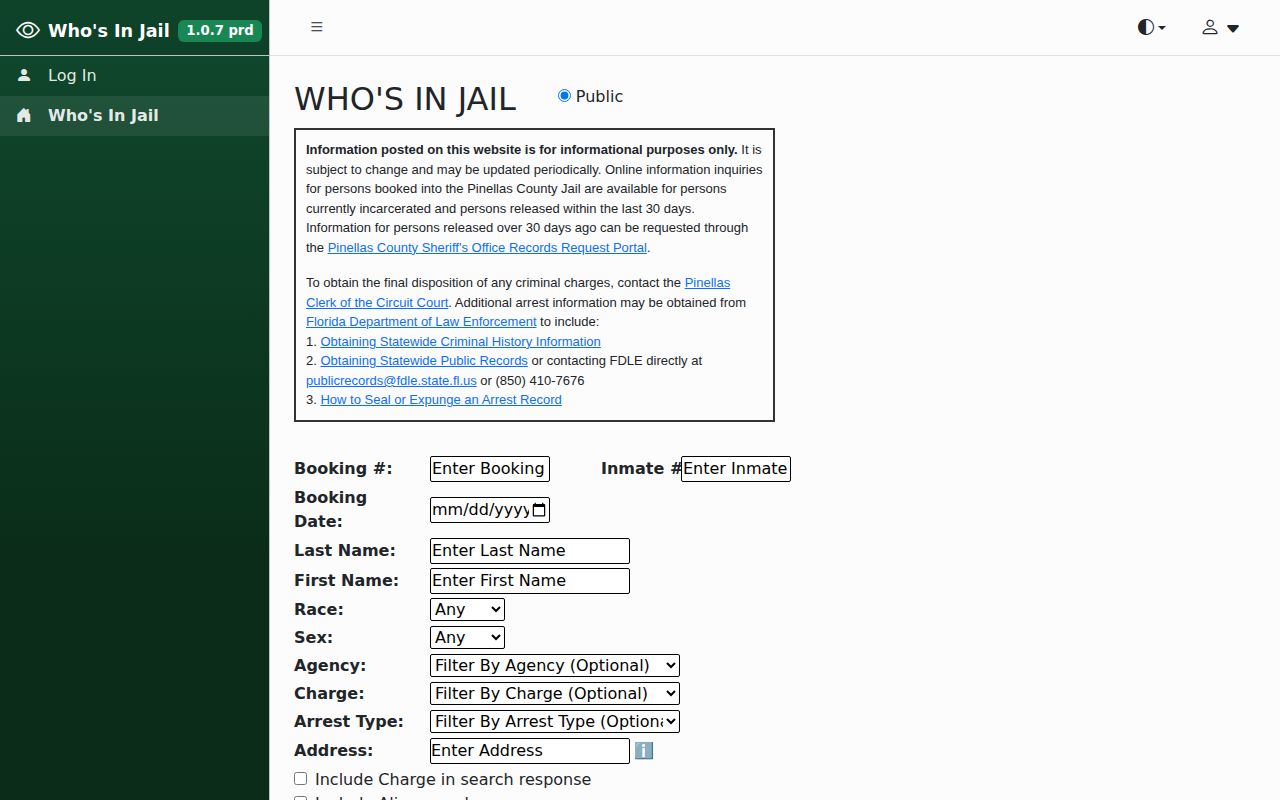
Its person-based controls explain why covering a longer stretch takes several date searches instead of just one.
Pinellas Arrest Entry Fields
The result pages often carry more detail than a police blotter would. Some fields go missing or get redacted. Values can change after the fact. Lean on the docket and agency identifiers when two people share a similar name.
| Entry field | How to read it |
|---|---|
| Name, aliases, and date of birth | Identity details used to reduce false matches. |
| Booking and arrest dates | Jail intake date and reported arrest date, which are not always the same. |
| Docket and agency report number | References for the jail, arresting agency, or later court search. |
| Arresting agency | The department that made the arrest, not necessarily the jail operator. |
| Offense and statute | Charges entered at booking, including amendments when shown. |
| Bond assessed or due | The bond snapshot attached to a listed charge. |
| Charge and custody status | Status at the time displayed, which can change after the search. |
Intake at the Pinellas County jail includes a photograph. Not every search result displays one, though. Treat the arrest log as a text record. When a specific booking photo does not appear, the official route is a request to PCSO Records rather than trusting an unofficial image somewhere online.
Pinellas Weekend Arrest Searches
The Pinellas County Sheriff's Office posts no weekend or holiday schedule for arrest results. A fat Monday result set might reflect the dates you chose, release timing, slow intake processing, or routine custody changes. Calling it a weekend surge would take separate statistics. The safer method is simple. Search each booking date and save your query range. Timing quirks matter here. Someone booked late one night may only surface easily the next day. A person released right after intake can still fall inside the 30-day released window. A citation-only event may never hit the jail roster at all. Someone transferred to state prison belongs in the FDC offender search, while federal or immigration custody needs the matching federal locator.
Older Pinellas Arrest Log Records
The 30-day online window is not the lifespan of the record itself. Florida's GS2 criminal-justice schedule treats booking records as material to keep. Fingerprints are included. The floor runs at least five anniversary years past release or transfer. Commitment and release lists covering a 24-hour period carry a one-anniversary-year minimum. Those are retention floors, nothing more. They do not mean PCSO posts the lists online or that every photo stays public. For an older booking, ask the PCSO Public Records Center. Give the full name and the date range. Add any docket or case number, the arresting agency, and the exact record type. PCSO Records also answers the phone at 727-582-5865. Expect possible exemptions, redactions, search work, and lawful fees. The Pinellas Clerk of the Circuit Court and Comptroller keeps the court side. It is the source for what happened in court. A sheriff booking record shows intake and custody. The Clerk docket shows the case itself. An old jail entry alone never settles the final outcome.
Pinellas Arrest News Is Selective
News pages serve a purpose, but they are not a Pinellas County arrest log. A reporter picks what to print; the jail books everyone. The PCSO News page carries selected releases. The announcements come straight from the sheriff's office. St. Petersburg and Clearwater police post their own chosen items. Outlets like Tampa Bay Times, Bay News 9, Tampa Bay Newspapers, and Tampa Bay Observer cover arrests selectively. They run a story only when it sells. For the full picture of who was arrested, the official PCSO release page alone shows what the sheriff actually publishes. It moves on its own schedule.
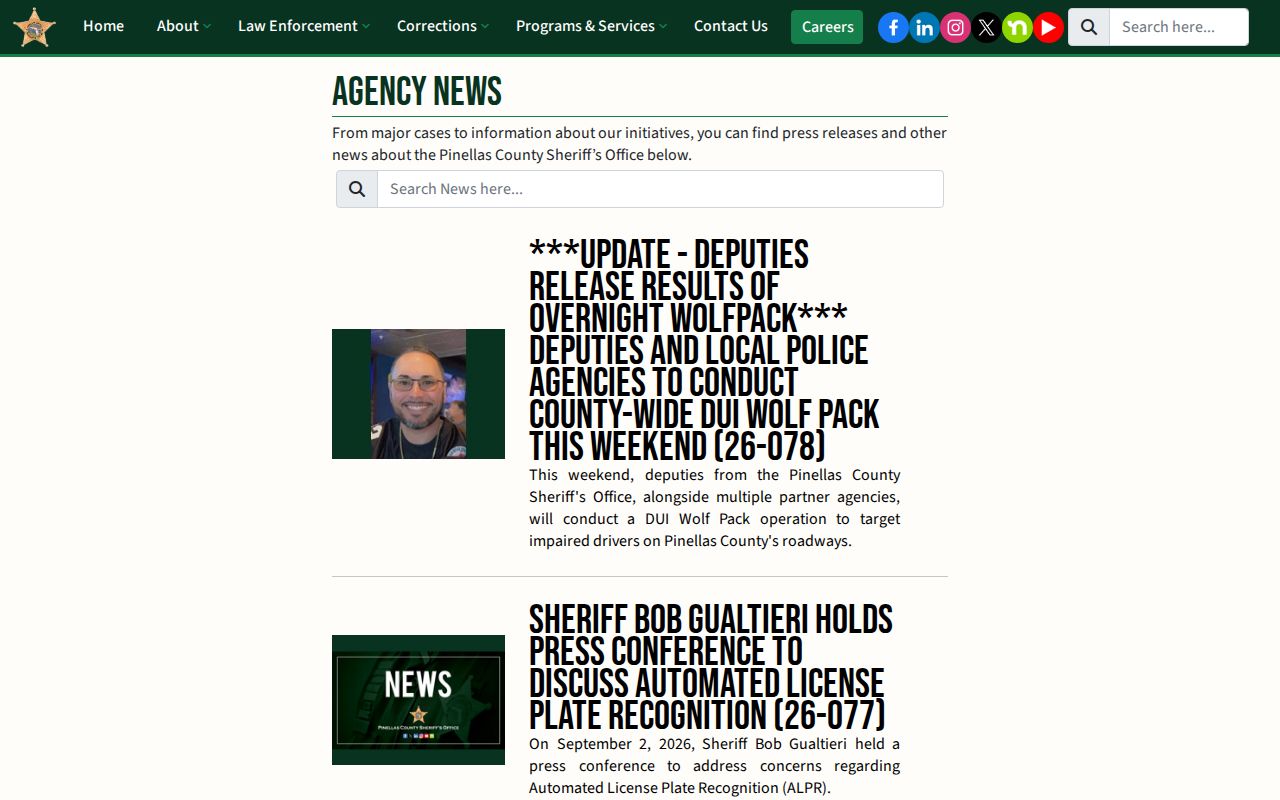
A missing press release does not mean no arrest happened. Coverage is selective by design. Tampa Bay Newspapers posts community Police Beat items on its TBNweekly site.
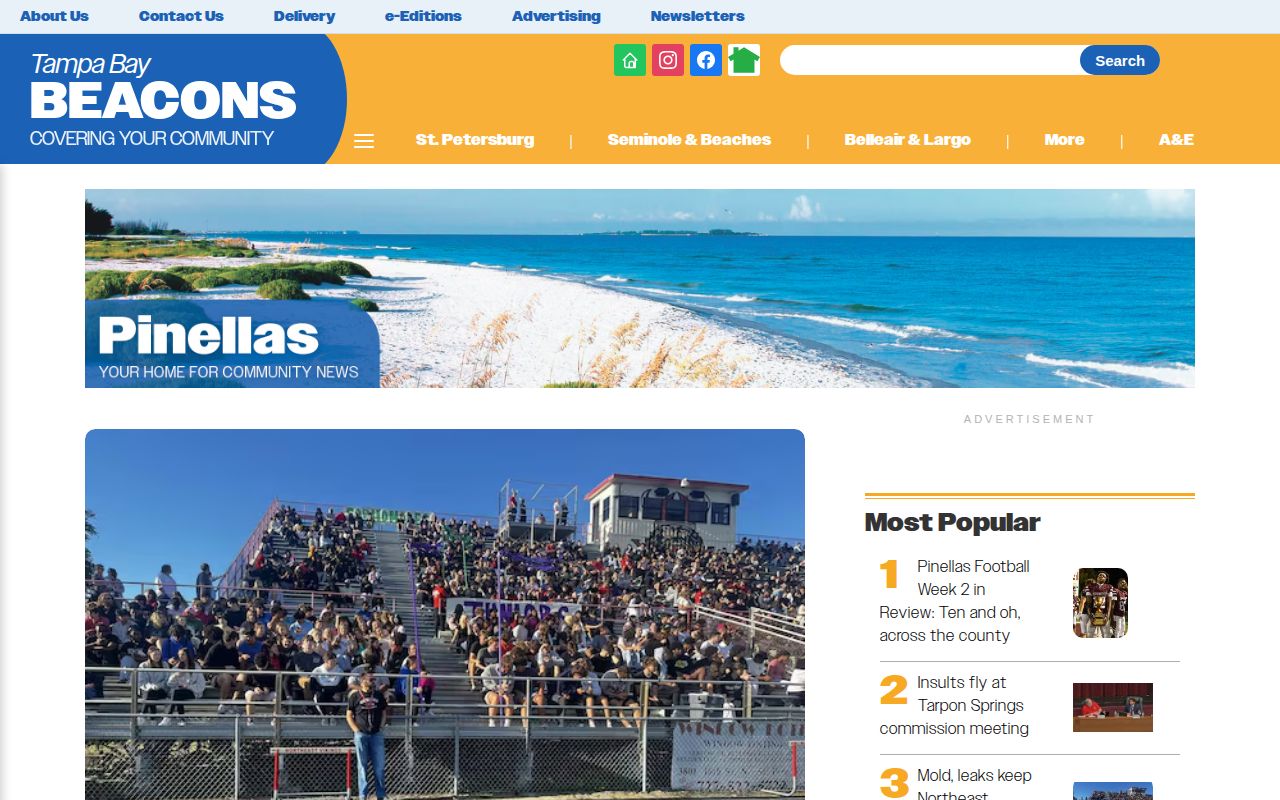
That local reporting helps with selected incidents. It still cannot replace an official PCSO search by date or name.
Unofficial Pinellas Arrest Listings
Unofficial arrest pages are only rough snapshots of Pinellas County jail activity. RecentlyBooked says it refreshes jail sources several times daily. It also notes that Pinellas releases no booking photos. Busted Newspaper lays out the county like an archive. Arrests.org adds county and agency filters. These listings can be stale, incomplete, or mismatched with later court action. Confirm anything through PCSO and the Pinellas Clerk before relying on it. A third-party page can linger online after a government record changes. Note its date and source if you consult one. TB Crimes covers greater Tampa Bay, not just this county. City and regional news deserve the same caution. A headline may describe an arrest before jail processing. It may also come after release, or from another county entirely. Check the agency, event date, and jurisdiction before matching. Only then try to tie the story to a PCSO record. The Busted Newspaper Pinellas page shows the archive-style format these sites favor. It carries no official authority and sits behind PCSO sources in this workflow.
Pinellas Arrests Versus Dispositions
Booking charges are just the first draft. Prosecutors can amend, reduce, dismiss, or drop charges. Cases end through pleas or trials. What the jail lists as a charge status is not a certified disposition, so use the booking docket or court case number to find the matching Clerk record. The county-wide Pinellas County recent-arrests hub keeps booking, jail custody, court, state, and federal channels separate. That helps once someone passes the multi-day county window. Sentenced people enter FDC custody. The state offender search is the next official source for them. Federal or immigration custody tells a different story. County and state tools may show only an earlier stage, and the systems can overlap in time without contradicting each other. A careful arrest-log review names the source, the custody stage, and the time checked.